
How to Use AI Manga Colorizer Prompts for Cel-Shaded Coloring
Summary: Learn how to use AI Manga Colorizer prompts to apply clean, cel-shaded anime coloring. Control shadows, tones, and style with clear prompt examples.
Cel-shaded anime coloring looks simple—but it’s notoriously hard to get right. One wrong shadow or soft gradient can instantly break the style.
Many creators struggle because most AI colorizers default to painterly shading, not clean color blocks. Without precise prompt control, “anime style” alone is rarely enough.
In this guide, you’ll learn how to use AI Manga Colorizer prompts to apply true cel-shaded coloring by controlling shadows, tones, and color boundaries directly.
Why Cel-Shaded Coloring Is So Hard to Get Right
Cel-shaded coloring isn’t difficult because the style itself is complex. It’s hard to get right because its core rules are often misunderstood—especially when coloring is handled by AI rather than manual workflows.
What Cel-Shaded Coloring Really Means in Practice
Cel-shaded coloring looks simple—until you try to get it right.
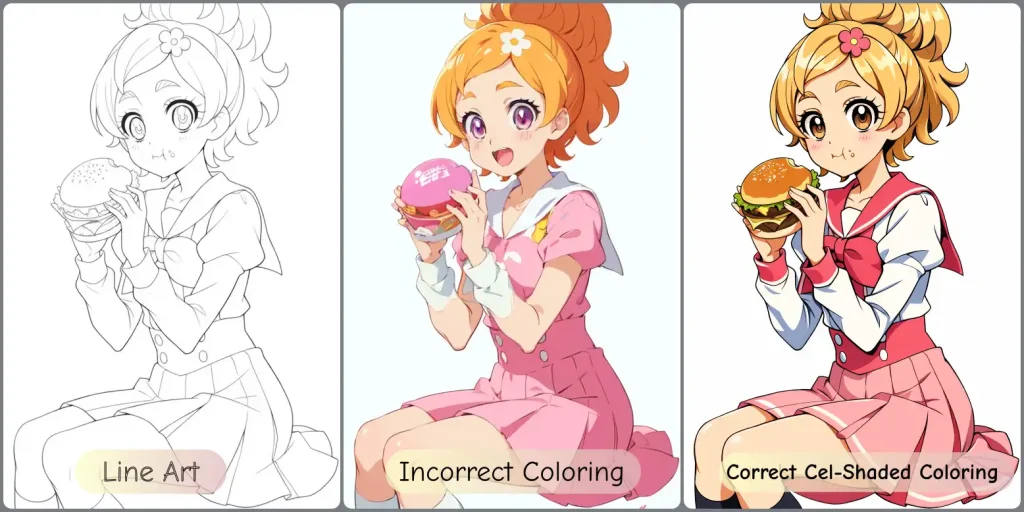
At its core, it relies on flat colors, clear shadow shapes, and sharp edges.
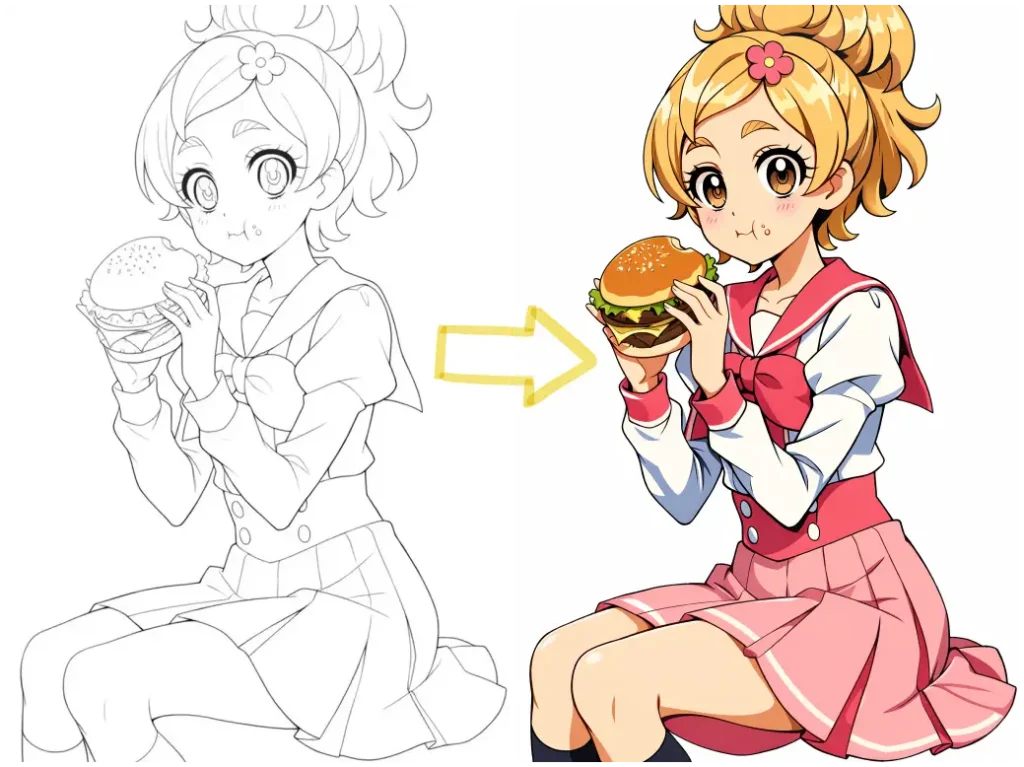
That difference is easier to see than to explain—compare the examples below.
Why Traditional Cel-Shading Workflows Feel So Complicated
The problem isn’t talent. It’s friction.
Traditional workflows require you to make a lot of small decisions: where shadows start, how hard the edges should be, and how consistent everything looks across panels. One small tweak often means repainting more than you expect.
It’s easy to lose time chasing “almost right” results.
What Creators Actually Need from a Cel-Shading Tool
Most creators don’t need perfect hand-painted control. They need predictable results.
A good cel-shading tool should keep colors flat, shadows readable, and line art intact—while letting you test different looks quickly. When iteration is fast and controlled, cel shading becomes a choice, not a bottleneck.
Customize Cel-Shaded Coloring with Anifun AI
Once you understand what makes cel-shaded coloring work, the next step is applying it consistently—without manually managing every detail.
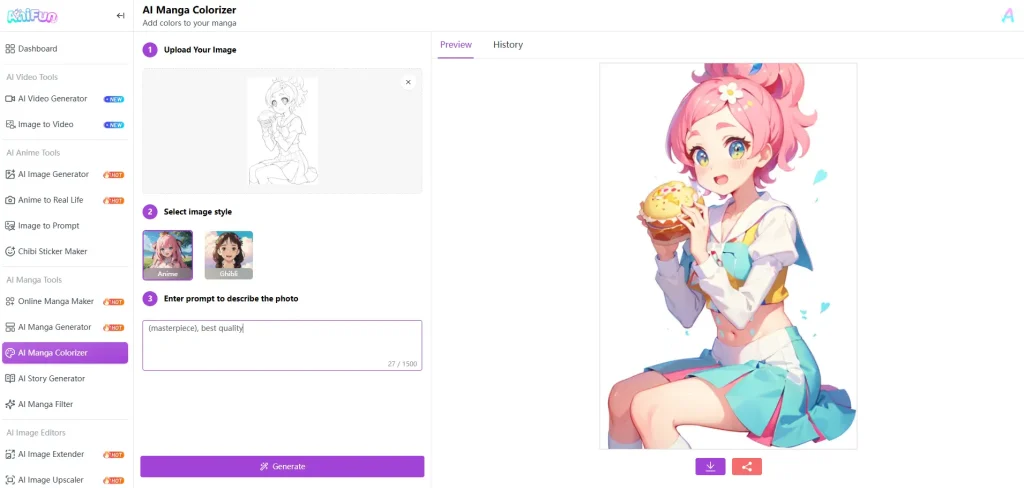
With Anifun AI’s manga colorizer, you can guide the coloring process through prompts, starting from a default result and refining it into clean cel-shaded coloring with flat colors and clear shadow shapes.
How Anifun AI Handles Manga Coloring
Anifun AI is designed to color manga line art with a strong focus on clean boundaries and clear color separation. It understands enclosed areas and line structure, keeping colors neatly within each region—ideal for cel-shaded styles.
Instead of soft, painterly blending, Anifun applies flat base colors with controlled shadow layers. This helps preserve sharp edges, readable forms, and the high-contrast look typical of anime and manga coloring.
Most importantly, Anifun responds clearly to cel-shading prompts. When you describe shading hardness, light direction, or flat color styles in text, the coloring result follows those instructions in a consistent and predictable way.
Below are direct, ready-to-use cel shading prompts you can apply immediately to achieve this style.
Ready-to-Use Prompts for Cel-Shaded Coloring
Cel-shaded coloring follows a set of clear rules rather than a single preset style.
The table below breaks down the key aspects of cel-shaded coloring and the keywords you can use to control each part.
Cel-Shaded Prompt Keywords by Coloring Aspect
Cel-Shaded Prompt Keywords by Coloring Aspect
| Aspect | What to Control | Keywords to Use |
|---|---|---|
| Shadows | Edge hardness, shading layers, light direction |
cel shading, sharp shadow edges, hard shadows, limited shading steps, clear light direction |
| Colors | Flatness, contrast, gradient usage |
flat base colors, minimal gradients, anime color blocks, high contrast |
| Line Art | Outline clarity, color boundaries |
clean outlines, color within lines, crisp edges, manga-style coloring |
Instead of relying on default coloring behavior, combining keywords from these categories allows you to precisely control how Anifun AI applies cel shading.
In the next section, we’ll apply these rules using full prompt templates and show how different combinations affect the final cel-shaded result.
How Different Prompts Change Cel-Shaded Results
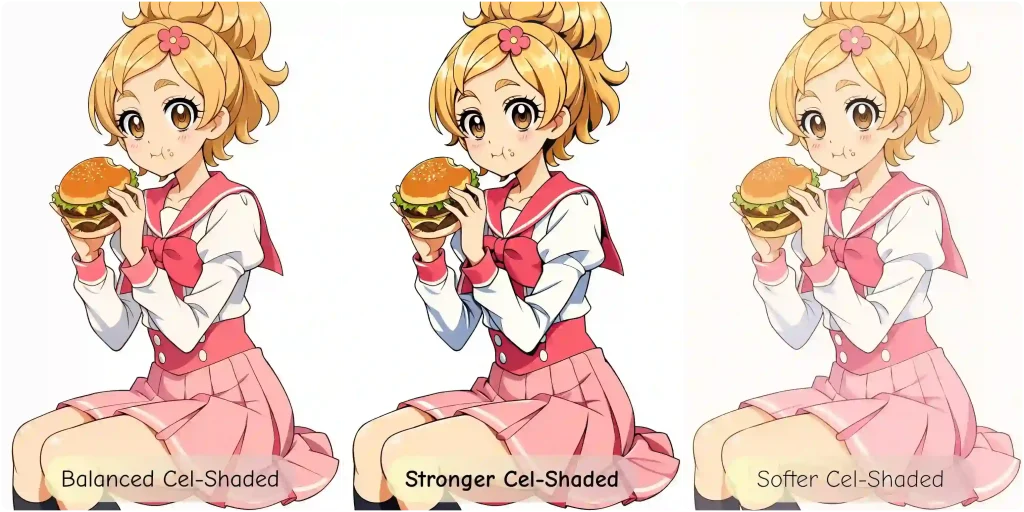
Even when using the same line art, changing how prompts emphasize shadows, colors, or line control can significantly alter the final cel-shaded result.
The examples below demonstrate how prompt structure—not the illustration itself—drives visual differences.
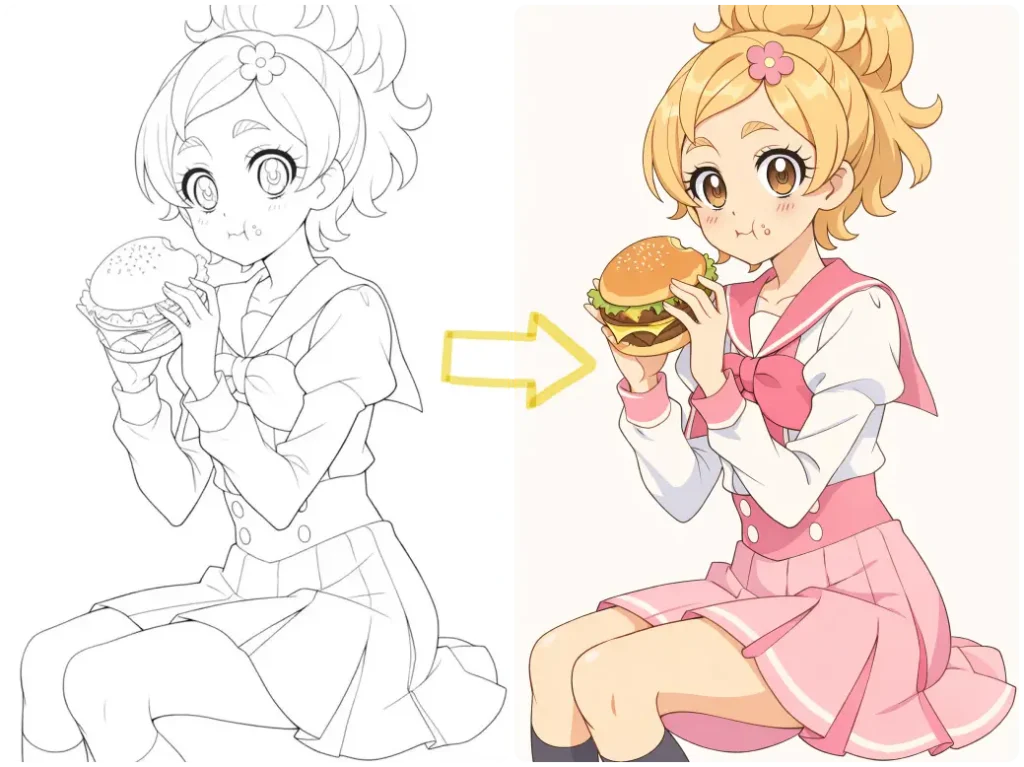
All examples use the same line art. Only the prompt emphasis changes.
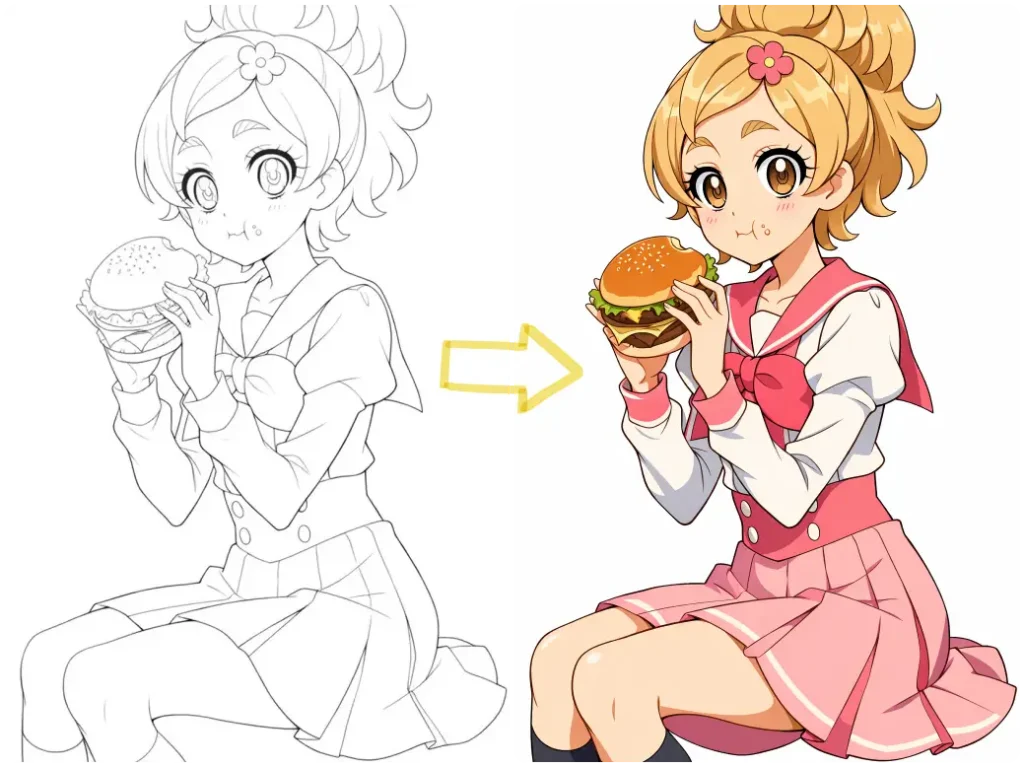
Example 1: Balanced Cel-Shaded Coloring
Prompt:
cel-shaded anime coloring, flat base colors, sharp shadow edges,
limited shading steps, clear light direction,
clean outlines, color within lines, manga-style coloring
What changes
This prompt produces a clean, well-balanced cel-shaded result with clear shadow separation and stable colors.
It serves as a reliable baseline for most anime and manga illustrations.
Example 2: Stronger Shadow Emphasis
Prompt:
high-contrast cel shading, bold shadow shapes, hard shadows,
flat base colors, minimal gradients,
clear light direction, crisp edges, manga coloring
What changes
By emphasizing shadow strength and contrast, this prompt creates a more dramatic look.
Shadow blocks become more pronounced, increasing visual impact without altering the line art.
Example 3: Softer Cel-Shaded Appearance
Prompt:
soft cel-shaded anime style, pastel colors, low saturation, low contrast,
thin and soft lineart, flat colors with very light shadows only,
simple, even lighting, gentle and airy feeling
What changes
This version reduces visual weight while preserving cel-shaded structure.
It results in a lighter, softer appearance suitable for casual scenes or cute character styles.
Common AI Cel-Shading Mistakes (and How to Fix Them)
After seeing how prompts can dramatically change cel-shaded results, it’s tempting to think that more instructions always mean better coloring.
In practice, many cel-shading problems come not from weak prompts—but from misguided ones.
These common mistakes often lead to muddy shadows, broken color logic, and inconsistent results.
Using Too Many Prompts in AI Cel-Shaded Coloring
Adding more prompts doesn’t always improve results.
In cel-shaded coloring, too many style and lighting terms often blur the model’s direction.
When prompts compete with each other:
- Shadows become messy
- Color blocks lose clarity
- The result stops looking cel-shaded
Tip: Clean, rule-based prompts usually work better than long, descriptive lists.
Describing Style Without Controlling Shadow Structure
Cel-shaded coloring isn’t defined by style words alone. Without clear shadow rules, the result often looks soft, blurry, or overly rendered.
Common mistake: describing “anime” or “cel-shaded” without specifying shadows.
- The AI fills gaps with gradients and soft lighting by default
- The result loses the crisp edge that cel shading requires
Tip: Focus on shadow shape and edge hardness more than stylistic adjectives.
Ignoring Line Art Quality Before Coloring
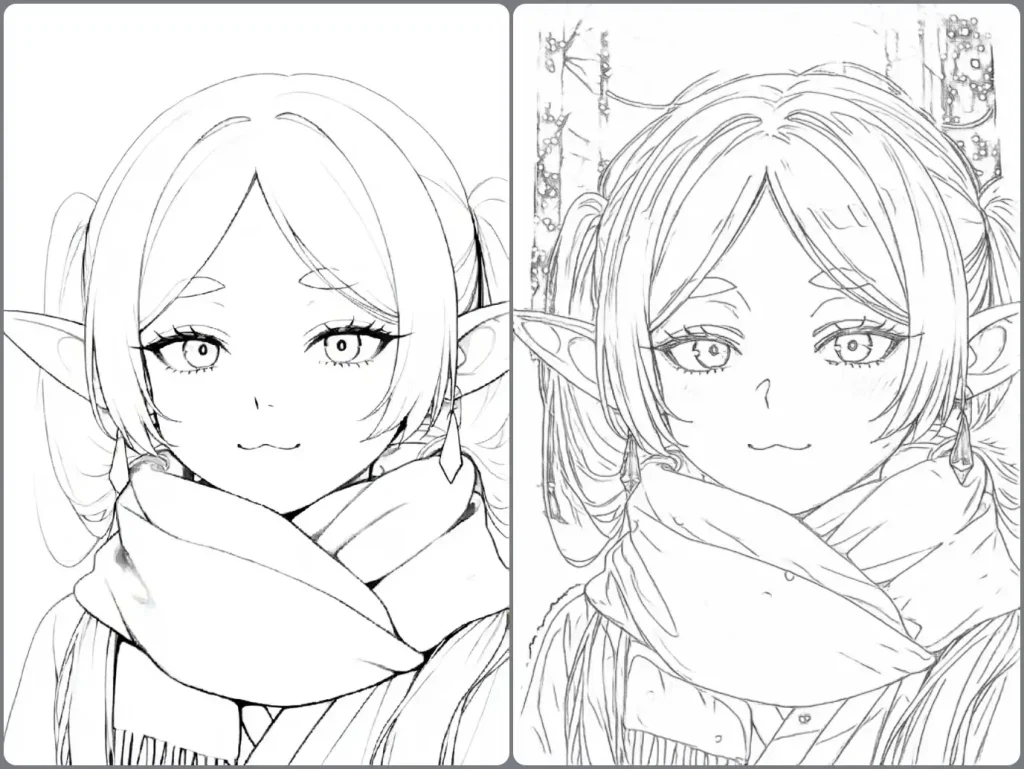
Even the best AI coloring prompts can’t fix messy or unclear line art.
Problems with poor line art:
- Colors bleed outside boundaries
- Shadows don’t align with the character’s form
Solution:
- Ensure lines are clean, consistent, and well-defined
- Thick, clear lines help the AI distinguish different areas
- A solid line art foundation allows the AI to focus on coloring instead of guessing the structure
Investing time in line art often has a bigger impact than endlessly tweaking prompts.
Conclusion
Cel-shaded coloring is not some mysterious “magic” — it’s a clear, rule-based approach. Instead of endlessly trial-and-erroring, using well-crafted prompts lets you directly control the coloring outcome.
For manga creators, coloring shouldn’t be a bottleneck in the creative process. With clean line art, proper prompts, and attention to shadows, AI can handle the heavy lifting, leaving you free to focus on storytelling and character expression.
Key takeaways:
- Cel-shaded coloring follows clear rules, not guesswork
- Smart prompts are more effective than repeated trial-and-error
- AI coloring should empower creators, not slow them down
Q1: Can I convert a colored illustration into cel-shaded style?
Yes, but original colors affect AI processing. Clean line art with simple color blocks works best for accurate cel-shaded results.
Q2: Why are some images more suitable for cel-shaded coloring?
Images with clear lines and defined areas let AI place shadows and highlights precisely. Complex gradients or unclear edges make AI coloring harder.
Q3: Does line art quality affect the final AI coloring result?
Yes. Clean, consistent lines help AI fill colors correctly and render shadows sharply. Messy or faint lines reduce accuracy.
Q4: Which manga styles are best suited for cel-shaded AI coloring?
Styles with clear line work and simple color areas, like shonen or shojo manga, work best. Highly detailed or gradient-heavy art is less ideal.